

Keynote Speakers
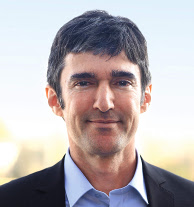
Hüseyin Boyacı
Abstract
Before Newton proposed his law of gravity, few would have imagined that the same mathematical formulation could account for the moon's orbit around the Earth and the fall of an object near the Earth's surface. Theory enables us to discover patterns across such seemingly unrelated and disparate natural phenomena, categorize them, and better understand the underlying mechanisms. Further, theory lets us predict new results under novel, never-before-tested conditions, guides the design of new tests, the results of which allow the refinement of the theory. Neuroscience is rich with data, and in recent decades, there has been a rise in efforts to build generalizable mathematical theories applicable to phenomena ranging from single-unit neural activity to behavioral outcomes. Two such widely successful mathematical constructs are the Bayesian rule at the behavioral level and the divisive normalization at the neural population level. In this talk, I will present several examples using those two mathematical formulations and show how they can provide straightforward solutions to unify and simplify phenomena that would otherwise require more complicated explanations.
Bio
After obtaining his PhD in Physics from Bilkent University in 1999, Dr. Boyaci switched his interest from electrons to neurons and completed postdoc studies at New York University (NYU) and the University of Minnesota at Twin Cities, focusing on human visual perception. In 2008, he joined then-newly established Psychology Department at his alma mater as a faculty member. He is still working at Bilkent University, in the Departments of Psychology and Neuroscience.
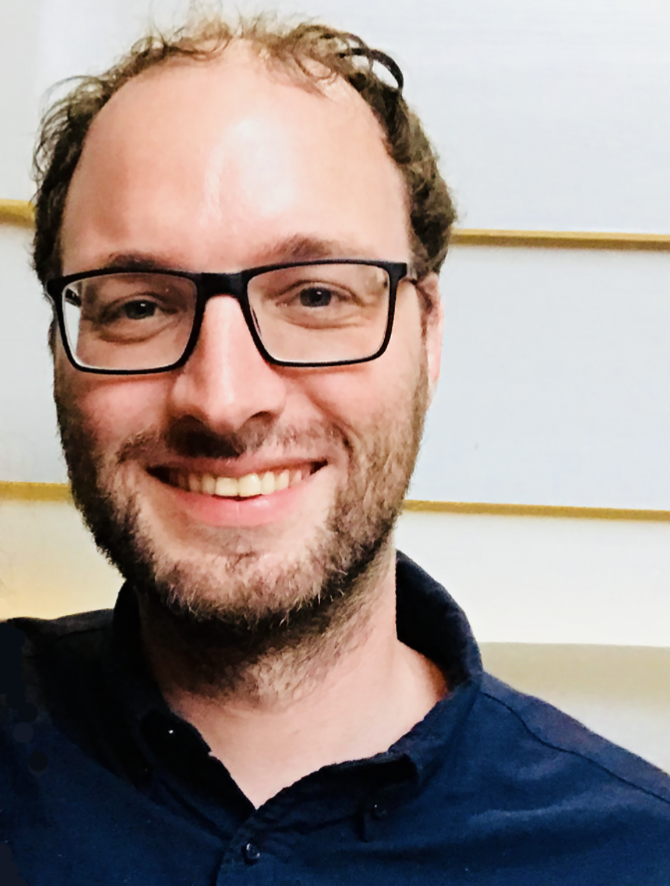
Peter Kok
Abstract
The way we perceive the world is strongly influenced by our expectations about what we are likely to see at any given moment. However, the neural mechanisms by which the brain achieves this remarkable feat have yet to be established. To understand the interplay between sensory inputs and predictions, we need to investigate the way these signals flow at the level of cortical circuits. I will discuss recent work in which we used ultra-high field (7T) fMRI to obtain BOLD signals at a spatial resolution sufficient to disambiguate signals from the different cortical layers, allowing us to infer the direction of signal flow. I will also discuss the role of the hippocampus as a potential generator of top-down prediction effects in visual cortex. Additionally, I will present work in which we used MEG to investigate the temporal dynamics of neural prediction signals. These complimentary approaches have shed new light on the neural circuitry underlying the effects of prediction on perception. Ultimately, this work aims to reveal how the brain determines the contents of our perception.
Bio
Prof Peter Kok is a principal investigator in the Functional Imaging Laboratory (FIL) at UCL, where he leads the visual perception group. Before joining UCL, Prof Kok obtained a PhD at the Donders Institute in The Netherlands, under the supervision of Prof Floris de Lange, and completed a postdoctoral fellowship in the lab of Prof Nicholas Turk-Browne, first at Princeton University and then at Yale University. Prof Kok is interested in how prior knowledge and expectations influence how we perceive the world, and how this is realised by the brain.
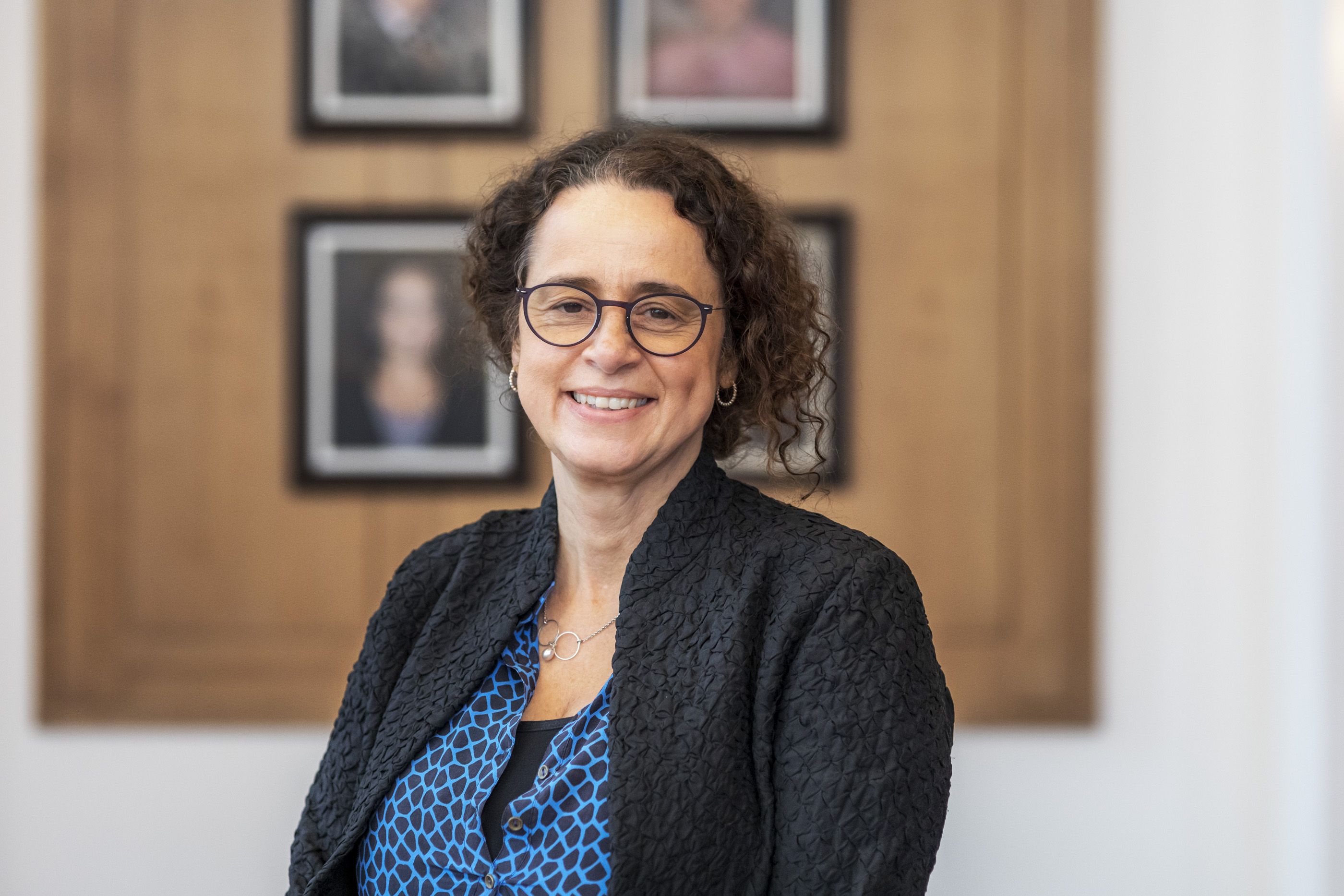
Aylin C. Küntay
Abstract
Humans animals refer to things, people, events and other referrables using multimodal communication each day every day during interactions. The communicative task of referring appears straightforward, but it often is not and may be developmentally challenging to develop. Referential communication is an area where pragmatic knowledge, social cognition, and interactive communication come together in human development. I will present a few experimental and semi-naturalistic studies that our Language and Communication Development (LCD) Lab conducted with preschoolers and infants on their referential behavior.
Bio
Aylin C. Küntay is a Professor of Psychology at Koç University. She received her PhD and MA in Developmental Psychology from the University of California, Berkeley. She completed her undergraduate studies in Psychology at Boğaziçi University. Her research focuses on language and communication development, sociocognitive development, and social interaction, with a particular emphasis on how children learn through communicative and cultural contexts. She studies topics such as gesture, child-directed input, and the role of interaction in learning, as well as the use of social robots in education.
Lars F. Muckli
Abstract
Internal models of the world generate predictions that are projected top-down through the cortical hierarchy, targeting superficial and deep layers. Bottom-up visual input, in contrast, enters via the retina and thalamus and primarily targets the middle layers of cortex. Within the cortical microcircuitry of each area, these two streams are compared and integrated.
We have developed a series of brain imaging experiments using 7T fMRI to probe internal models and feedback mechanisms in early visual cortex. In combination with work from colleagues using rodent recordings and monkey electrophysiology, we have begun to characterise the microcircuitry underlying these feedback–feedforward interactions. We are now asking how these circuits learn and update over time.
Across three experiments, I show:
1. How memory of disambiguated context enhances cortical feedback signals for occluded Mooney images.
2. How memorised items are reinstated behind occluding stimuli.
3. How images come to be recognised as category exemplars after repeated presentation.
These memory-dependent dynamics manifest in distinct cortical layers. Going forward, we aim to identify and characterise microcircuit mechanisms that extend beyond simple prediction and context integration, towards a more comprehensive account of cognitive integration within the visual processing hierarchy.
Bio
Lars Muckli is Professor of Visual and Cognitive Neurosciences at the School of Psychology and Neuroscience, University of Glasgow. He completed his PhD at the Max Planck Institute for Brain Research in Frankfurt (PhD in 2002, supervised by Rainer Goebel and Wolf Singer). In 2007, he moved to Glasgow, where he contributed to the opening of the Centre for Cognitive Neuroimaging (CCNi) in 2008 and the Imaging Centre of Excellence (ICE) in 2017. His work focuses on brain imaging of cortical feedback, the investigation of layer-specific fMRI, and multilevel cross-species computational neuroscience. Between 2016 and 2023, Lars was a member of the Human Brain Project (HBP).